Abu Dhabi Tickets

Guggenheim Abu Dhabi Architecture — Gehry’s desert landmark redefining museum form

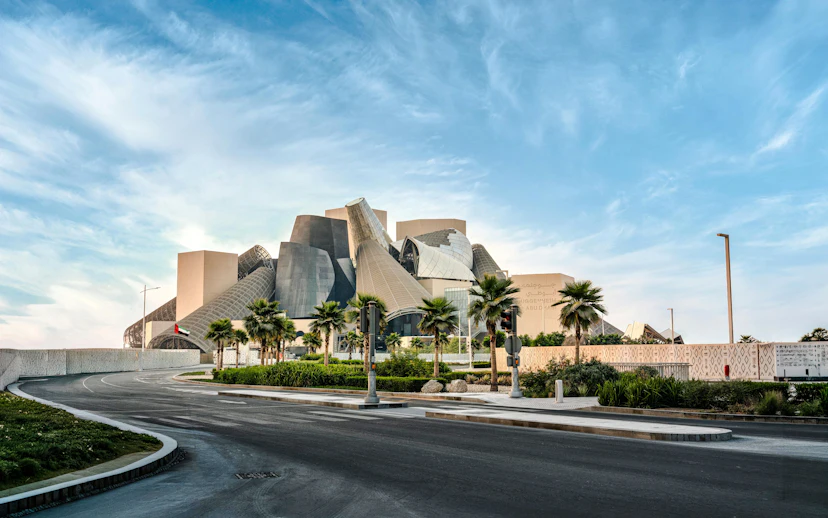
Guggenheim Abu Dhabi stands at the forefront of Saadiyat Island’s cultural district, where a bold Gehry design turns a museum visit into a curated architectural experience. The building’s sculptural language—its sweeping curves, cone elements, and luminous surfaces—frames art and public space as a single, immersive journey. The architecture isn’t just a shell for exhibitions; it is part of the spectacle, inviting you to read the space as you move through it. On this page, you’ll discover how Frank Gehry’s concept responds to climate, coastline, and culture, why the building itself matters as a design destination, and how to plan a visit that centers the architecture as the core payoff.

Quick navigation

  • Overview
  • Architectural style(s) & influences
  • Architectural highlights
  • History of Guggenheim Abu Dhabi’s architecture
  • The exterior of Guggenheim Abu Dhabi
  • The interior of Guggenheim Abu Dhabi
  • Best Guggenheim Abu Dhabi tickets & tours to explore Guggenheim Abu Dhabi architecture
  • Frequently asked questions about Guggenheim Abu Dhabi’s architecture
  • More reads

Quick overview of the architecture of Guggenheim Abu Dhabi

  • Official name: Guggenheim Abu Dhabi
  • Location: Saadiyat Island, Abu Dhabi
  • Category: Museum
  • Era: Contemporary
  • Style: Contemporary museum architecture; Gehry landmark design
  • Lead architect: Frank Gehry
  • Size and scope: 28 galleries and 10 sculptural cones
  • Height: Reaches up to 88 metres
  • Context: Part of the Saadiyat Cultural District, alongside Louvre Abu Dhabi and other cultural anchors
  • Arrival note: On arrival, you’ll encounter a dramatic exterior that signals architecture-first payoff (Google Maps: Guggenheim Abu Dhabi, Saadiyat Island)

Architectural style(s) & influences

Guggenheim Abu Dhabi embodies a contemporary museum architecture language that places Gehry’s sculptural approach at the center of the visitor experience. The design interprets global modernism through a local lens, balancing monumental exterior forms with intimate interior responses. Key features include the iconic cone clusters, which are not merely decorative but function as shading devices and airflow facilitators, creating a climate-smart campus on the waterfront. The central atrium acts as the architectural backbone, guiding movement and sightlines through interconnected galleries. Materials emphasize luminosity and texture—reflective surfaces catch desert light while carefully chosen interiors temper heat and glare. The result is a building that reads as both a landmark and a site-specific cultural venue, with architecture shaping the encounter as much as the art.

Notable terms to notice

  • Deconstructivist-influenced Gehry vocabulary, adapted for a climate-forward Gulf context
  • Cone clusters: shade, airflow, and dramatic massing
  • Central atrium as orientation hub
  • Waterfront orientation and ethical materiality that respond to Saadiyat’s climate

Architectural highlights of Guggenheim Abu Dhabi

Cone clusters on Guggenheim Abu Dhabi skyline

Oculus-like gesture and cone clusters

A sculptural cone cluster dominates the skyline, with reflective mesh wrapping and one cone finished in onyx and glass, offering a dramatic silhouette and interior light interplay.

Grand atrium inside Guggenheim Abu Dhabi
Curved exterior forms of Guggenheim Abu Dhabi
Terraces connecting galleries to waterfront views
Mesh detailing on Guggenheim Abu Dhabi cone

Guggenheim Abu Dhabi emerged from Saadiyat Island’s ambitious cultural-district plan, with initial momentum building from 2009 as the collection began to take shape and plans for a landmark Gehry-designed museum intensified. Frank Gehry’s concept integrated 28 galleries and 10 sculptural cones into a cohesive cultural campus, aligning architecture with an internationally focused yet regionally aware curatorial frame. By mid‑2020s, official communications emphasized the building as an integral part of the visitor experience, not merely a container for art. The pre-opening phase underscored a rigorous, timed-entry regime designed to preserve the architecture-led journey while positioning the building as a premiere opening-year icon on Saadiyat Island. The public opening date is 11 December 2026.

The exterior of Guggenheim Abu Dhabi

The exterior presents a bold Gehry signature—curved volumes, sculptural cones, and a skylit, horizon-engaged silhouette. Cone clusters dominate the skyline, some clad in stainless steel mesh to catch and refract light, with at least one cone finished in onyx and glass for a striking material contrast. The massing reads as a contemporary monument that nonetheless negotiates heat and wind through its shading strategies and axial geometry. The waterfront setting reinforces how the structure interacts with sky and water, inviting visitors to encounter the building as both sculpture and public space. Accessibility considerations and approach routes are oriented toward car and taxi access from downtown, with a dedicated museum entrance on Saadiyat Island.

The interior of Guggenheim Abu Dhabi

Inside, the journey unfolds through a network of interconnected galleries organized to emphasize exploration over a fixed path. The central atrium anchors the route, offering dramatic vertical views and sightlines into gallery runs. Visitors move through a choreography that balances contemporary art with Gehry’s architectural rhetoric, using the flow to highlight both the building and the works on display. Indoor climate control supports a comfortable experience throughout the year, with terraces and transitional spaces contributing to a multi-sensory sense of place. Expect a sequence that rewards patient viewing and architectural attention as part of the overall cultural experience.

Frequently asked questions about Guggenheim Abu Dhabi’s architecture

The building positions Gehry’s architectural language at the forefront of the visitor experience, with cone clusters, a central atrium, and climate-responsive design as core payoff.

More reads

Saadiyat Cultural District overview and how Guggenheim Abu Dhabi fits within the district

Louvre Abu Dhabi and Saadiyat cultural district pairings

Official Guggenheim Abu Dhabi architecture releases and design-forward statements

Planning a Saadiyat Island cultural day: routing and timing considerations