Plan your visit to Guggenheim Abu Dhabi
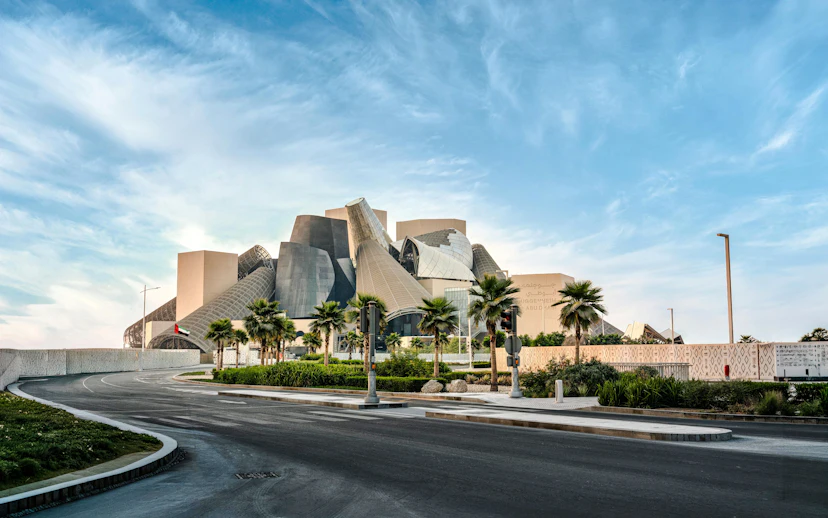
Guggenheim Abu Dhabi is a major modern and contemporary art museum in Saadiyat Cultural District, known as much for Frank Gehry's architecture as for its galleries. A visit here is likely to feel as much about moving through dramatic spaces as seeing the art itself, so timing and pacing matter more than a simple in-and-out museum stop. The biggest difference between a rushed visit and a rewarding one is allowing enough time for the atrium, galleries, and terraces together. This guide covers tickets, timing, arrival, and how to plan your route.
Quick overview: Guggenheim Abu Dhabi at a glance
Guggenheim Abu Dhabi rewards a little planning because entry is timed, re-entry is not allowed, and the building itself is part of the experience.
- When to visit: Timed public access begins December 11, 2026, and choosing a slot with buffer before last admission makes the visit feel easier because late arrivals may be refused.
- Getting in: Standard timed admission starts at AED 70 for adults, with digital date-and-time tickets and advance booking strongly recommended during the opening period.
- How long to allow: Allow 2–4 hours for most visits, with architecture-focused wandering and multiple gallery runs pushing you toward the longer end.
- What most people miss: The terraces, cone spaces, and the way the atrium connects the galleries are as important to the visit as the exhibitions themselves.
- Is a guide worth it? A guide is not essential here if your main goal is to explore the building at your own pace, since timed admission already gives you a structured entry point.
Jump to what you need
🕒 Where and when to go
🗓️ How much time do you need?
🎟️ Which ticket is right for you?
🗺️ Getting around
🖼️ What to see
♿ Facilities and accessibility
Where and when to go
How do you get to Guggenheim Abu Dhabi?
Guggenheim Abu Dhabi sits on Saadiyat Island in the Saadiyat Cultural District, around a 15–20 minute drive from central Abu Dhabi.
Guggenheim Abu Dhabi, Saadiyat Island, Abu Dhabi, UAE
- Driving: Saadiyat Island approach from downtown Abu Dhabi → about 15–20 min → easiest option for most visitors.
- Taxi / rideshare: Request drop-off at the Guggenheim Abu Dhabi entrance → direct arrival → useful if you do not want to park.
- Public transport: Saadiyat connections are more limited than central Abu Dhabi routes → allow extra transfer time if not arriving by car.
- Parking: On-site parking is available → useful for district-day visits that combine nearby museums.
Which entrance should you use?
The museum operates as a timed-entry venue, so the main thing to get right is arriving at the correct entrance with enough buffer for security and ticket checks.
- Main entrance: Located at the Guggenheim Abu Dhabi visitor entry point on Saadiyat Island. Best for all timed-admission visitors. Expect short processing time if you arrive before your slot.
When is Guggenheim Abu Dhabi open?
- Opening date: Public access begins December 11, 2026.
- Admission type: Entry is timed by date and slot.
- Last entry: Final admission is one hour before closing.
When is it busiest? Opening weeks and popular midday slots are likely to feel busier because timed-entry demand is concentrated around launch-period visits.
When should you actually go? Choose an earlier or buffer-friendly timed slot so you have room for security checks and enough time to move through the building without rushing.
How do you get around Guggenheim Abu Dhabi?
Getting around the museum
Guggenheim Abu Dhabi is best approached as a large, exploratory museum where the architecture shapes the route as much as the galleries do. In practice, that means it is easy to self-navigate, but just as easy to rush through the atrium and miss how the cone spaces and terraces connect the visit.
- Central atrium: Main orientation point and architectural anchor → pause here first → about 15–20 min.
- Gallery runs: Interconnected exhibition spaces → move through them in clusters rather than racing room to room → 60–120 min.
- Cone spaces and terraces: Transitional indoor-outdoor areas → worth slowing down for the building experience itself → 20–40 min.
Suggested route: start in the atrium, let your first gallery loop follow naturally from there, then save time for the cones and terraces before exiting since these are the parts many visitors admire but under-budget.
Maps and navigation tools
- Map: Use the on-site visitor map or official museum guidance → it helps you understand the atrium, galleries, and terrace flow before you commit to a route.
- Signage: Wayfinding should be sufficient for a general visit, but a map is still useful because the building is designed as an exploratory sequence rather than a simple loop.
- Audio guide / app: Check ticket or on-site options on arrival → this can add value if you want more context on the architecture and curatorial layout.
💡 Pro tip: Start with a full visual sweep of the atrium before entering the first gallery cluster, since it helps you understand the building and cuts down on backtracking later.
Where are the masterpieces inside Guggenheim Abu Dhabi?

Central atrium
Attribute: Architecture - Frank Gehry
The central atrium is the museum's spatial anchor and the best place to understand how the rest of the building unfolds around you. It is worth slowing down here before heading into the galleries, because this is where the scale and drama of the visit first click. Most visitors move on too quickly instead of using it as their orientation point.
Where to find it: At the heart of the museum, immediately after entry.
Interconnected gallery runs
Attribute: Collection focus - modern and contemporary art
The galleries are designed as a flowing sequence rather than a strict room-by-room route, which makes wandering part of the experience. This layout rewards visitors who move deliberately and follow the connections between spaces instead of trying to see everything in order. What people often miss is how the architecture changes the mood from one gallery run to the next.
Where to find it: Branching outward from the central atrium through the main exhibition spaces.
Cone spaces
Attribute: Architectural feature - signature interior volumes
The cone spaces are part of what makes this museum feel distinct from a standard white-box gallery. They create dramatic shifts in scale and light, and they are best appreciated slowly rather than as pass-through zones between exhibitions. Many visitors register them as background design when they are actually one of the building's key highlights.
Where to find it: Along the museum's circulation route between major gallery zones.
Terraces and indoor-outdoor transitions
Attribute: Visitor experience - architecture and setting
The terraces matter because they break up the gallery rhythm and connect the museum to its Saadiyat Island setting. They are where the visit feels least like a conventional museum stop and most like a designed sequence of interior and exterior moments. Visitors focused only on the galleries often skip them and lose part of the building's payoff.
Where to find it: Off the main internal route where the museum opens toward public outdoor spaces.
Facilities and accessibility
- 🚻 Restrooms: Restrooms are part of the standard museum footprint, so you can expect them within the main visitor areas.
- 🪑 Seating: Seating areas are included as part of the museum experience, which is helpful for a slower architecture-first visit.
- 🅿️ Parking: On-site parking is available, making car arrival the most straightforward option for most visitors.
- 🍽️ Food and drink: Cafes are expected as part of the wider Saadiyat cultural campus, which makes it easier to plan a longer district day.
- 🛍️ Shopping: A gift shop is anticipated as part of the museum experience, in line with other flagship cultural venues.
- 🕌 Prayer spaces: Check on arrival for prayer-room access if you need it as part of your visit.
- ♿ Mobility: Accessible space and seating are available where needed, and visitors with limited mobility are advised to contact the venue in advance to arrange support.
- 👁️ Visual impairments: Check with the museum directly before your visit for any arrival support or assistance options that may be available.
- 🧠 Cognitive and sensory needs: A timed-entry slot can help you shape a calmer visit, especially if you prefer to avoid busier arrival windows.
- 👨👩👧 Families and strollers: Family visits are supported through timed-entry planning, and a slower route through the main spaces will feel easier with children.
- 🕐 Time: A 2–3 hour visit is realistic with children if you focus on the main architectural spaces rather than trying to cover every gallery.
- 🏠 Facilities: Restrooms, seating, and the standard museum visitor footprint make it easier to pace the visit with younger children.
- 💡 Engagement: Children are more likely to respond to the scale of the atrium, cone spaces, and terraces than to a full gallery-by-gallery route.
- 🎒 Logistics: Book a slot with buffer before entry, carry only what you need, and avoid rushing since there is no re-entry.
- 📍 After your visit: The wider Saadiyat Cultural District makes it easy to continue the day with another nearby museum stop or a relaxed meal.
Rules and restrictions
What you need to know before you go
- Entry requirement: Standard admission is timed and tied to a specific date and slot, so keep your digital ticket ready before you arrive.
- Bag policy: Security checks apply at entry, so carrying a compact bag will make arrival easier.
- Re-entry policy: Re-entry is not allowed, which means you should eat, pace, and plan breaks before entering the museum.
Not allowed
- Late arrival: Visitors who arrive too late for their timed slot may be refused entry.
- Security exceptions: Follow on-site security directions at the entrance, especially for bags and personal belongings.
Photography
A full photography policy has not yet been publicly detailed, so follow all on-site signs and staff instructions when you enter. If rules differ by gallery or exhibition area, expect those distinctions to be posted inside rather than applied as one blanket policy.
Practical tips
- Book a timed slot with extra buffer before arrival, since final admission is one hour before closing and late arrivals may be refused.
- If architecture is your main reason for going, do not treat this like a quick gallery stop; save time for the atrium, cone spaces, and terraces instead of spending everything in the first run of galleries.
- A 2–3 hour visit works if you stay focused, but half a day feels more rewarding if you want to absorb both the building and the exhibitions without rushing.
- Arriving with a small bag will make security checks easier, which matters more here because there is no re-entry if you need to step back out.
- If you are pairing this with Louvre Abu Dhabi or another Saadiyat stop, visit with a single district-day plan rather than treating each museum as a separate cross-city trip.
- Plan your meal around your ticket slot, since on-site and nearby dining is easiest to enjoy before entry or after you exit for good.
What else is worth visiting nearby?
Commonly Paired: Louvre Abu Dhabi
Distance: Short drive
Why people combine them: Both are Saadiyat Cultural District anchors, so pairing them creates a natural museum-focused day without crossing the city twice.
Book / Learn more: Louvre Abu Dhabi tickets
Commonly Paired: Zayed National Museum
Distance: Nearby district site
Why people combine them: It adds a history-focused counterpoint to Guggenheim Abu Dhabi's architecture and contemporary art, making the day feel broader without complicating logistics.
Book / Learn more: Zayed National Museum tickets
Also Nearby
Louvre Abu Dhabi and Zayed National Museum together
Distance: Within the Saadiyat district
Worth knowing: If district-day package options are available, this is the easiest way to turn one museum visit into a fuller Saadiyat cultural circuit.
What to eat, shop and stay near Guggenheim Abu Dhabi
- On-site: Expect cafe-style food options within or near the Guggenheim Abu Dhabi campus, best used as a convenient museum-day break.
- Better options nearby: Louvre Abu Dhabi dining spots are a useful nearby choice if you are building a wider Saadiyat cultural day.
- Better options nearby: Other Saadiyat venues can work well for a sit-down meal after your timed museum visit.
- Better options nearby: A coffee or light meal break in the district is a smart way to pace a half-day or full-day itinerary.
- Pro tip: Eat before entry or after you finish, since no re-entry means you should not plan on stepping out mid-visit.
- Museum shop: A design-focused gift shop is expected as part of the flagship museum experience, with likely emphasis on art books, exhibition merchandise, and visually striking souvenirs.
- Nearby cultural retail: Other Saadiyat museum venues can complement the main shop if you want a broader cultural-shopping stop during the day.
Saadiyat Island makes sense if your trip is built around museums, architecture, and a slower cultural day rather than nonstop city-center sightseeing. It is especially useful if you want to combine Guggenheim Abu Dhabi with nearby institutions without repeating taxi journeys.
- Price point: The area tends to feel more destination-focused than budget-led, especially compared with broader Abu Dhabi stay options.
- Best for: Visitors planning a Saadiyat museum day, a short cultural break, or a slower itinerary with minimal travel between venues.
- Consider instead: Central Abu Dhabi is a better base if you want easier access to a wider mix of city attractions beyond the cultural district.
Frequently asked questions about visiting Guggenheim Abu Dhabi
Most visits take 2–4 hours, depending on how much time you spend in the galleries and architectural spaces. A shorter 2–3 hour visit can cover the core experience, but a half-day pace feels more rewarding if you want time for the atrium, cone spaces, and terraces as well.
Yes, advance booking is recommended because entry is timed by date and slot. That matters even more during the opening period, when preferred times are more likely to fill first and same-day flexibility is lower.
No publicly evidenced skip-the-line product is currently available for Guggenheim Abu Dhabi. The standard approach is timed admission, so choosing the right slot and arriving early matters more than paying for a separate fast-entry tier.
Arrive ahead of your booked time so you can clear security and find the entrance without stress. Because entry is timed and late arrivals may be refused, even a short delay can affect whether you get in smoothly.
Yes, but expect a security check at entry and keep your bag compact if possible. A smaller bag makes arrival easier, and it matters more here because you cannot re-enter once you leave the museum.
Photography rules are expected to depend on on-site policy and posted gallery guidance. Follow venue signage and staff instructions once inside, especially if rules differ between general spaces and specific exhibition areas.
Yes, Guggenheim Abu Dhabi can work well for families if you plan a paced visit of about 2–3 hours. The large architectural spaces are likely to be as engaging as the galleries, and it is worth confirming any child entry rules or concessions when you book.
Accessibility support is provided where available, and visitors with limited mobility are encouraged to contact the venue in advance. That is the best way to arrange any assistance and to make sure your route through the museum is as smooth as possible.
Yes, food options are expected on-site or within the wider Saadiyat cultural district. If you are building a longer museum day, it is easier to plan meals before entry or after your visit because re-entry is not allowed.
Check the ticket terms at the time of booking, since timed-entry tickets are issued for specific dates and slots. Any change or cancellation flexibility will depend on the fare conditions attached to the product you choose.